The Moment Got Crowded
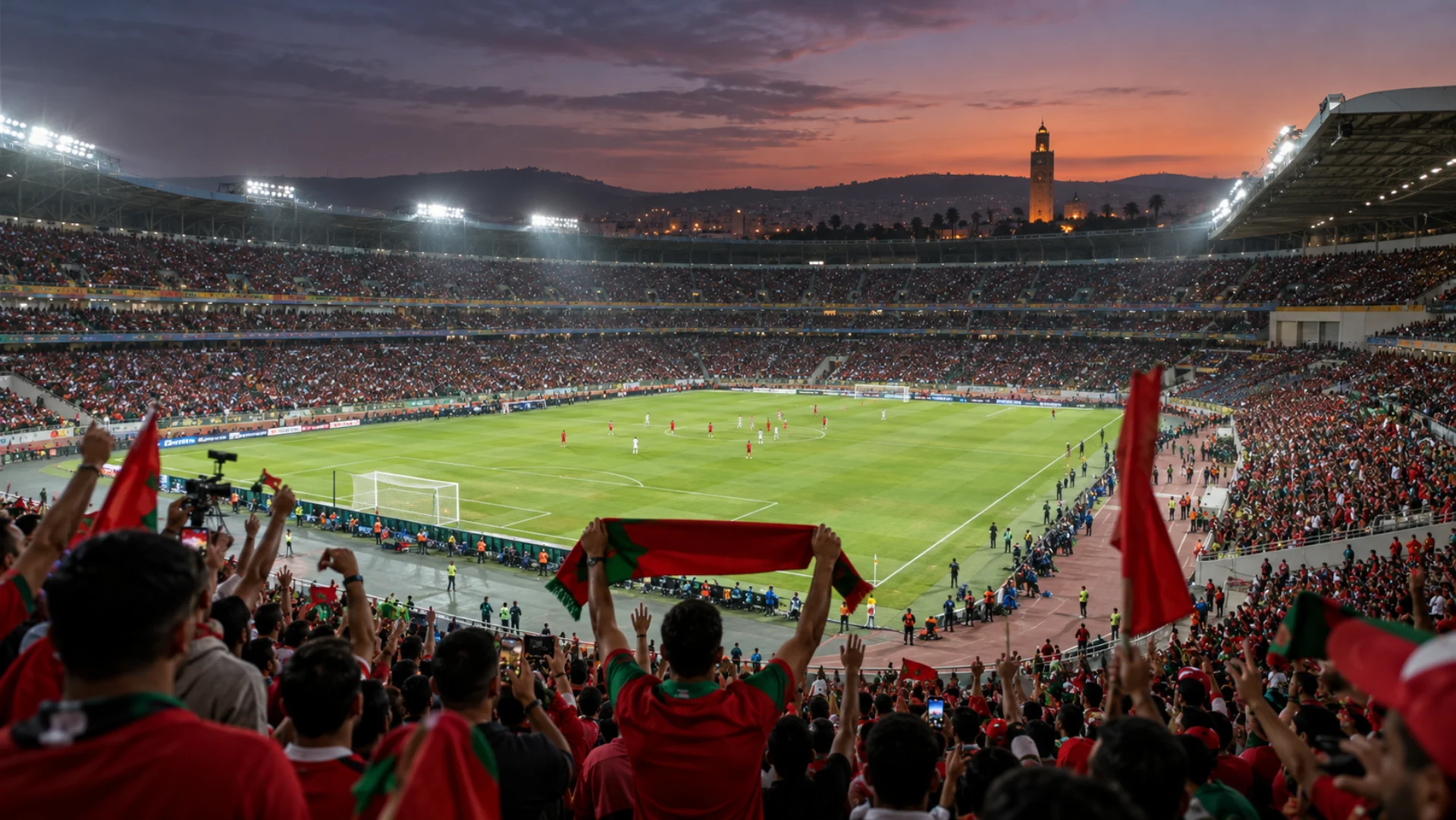
Between 21 December 2025 and 18 January 2026, Morocco hosted the Africa Cup of Nations for the first time since 1988. For a month the country was the centre of African football, and every brand operating here understood that something worth being part of was happening.
The commercial numbers tell you how many of them reached the same conclusion. CAF ended the tournament with twenty-three sponsors, up from seventeen in Côte d'Ivoire two years earlier and nine in Cameroon in 2021, with competition revenues rising more than ninety percent. Sponsors arrived from the United States, China, Germany, Japan, Türkiye and the United Kingdom, and the European Union took a sponsorship for the first time.
That growth is good news for African football. It is a harder problem for the brands involved. When the sponsor roster nearly triples in four years, holding official rights stops being a way to stand out. Everyone at that table is paying for access to the same attention, and the audience is not counting logos.
Which means the interesting question about AFCON 2025 is not who sponsored it. It is who people actually noticed, and why.
The Best Campaign of the Tournament Was Not a Brand's
The most complete piece of communication around AFCON 2025 came from the national tourism office. ONMT's "Land of Football" is worth studying closely, because it did almost everything a brand campaign at a major moment should do and almost nothing that brands actually did.
It started early. The partnership with the football federation was formalised in April, eight months before a ball was kicked, which is why the campaign arrived finished rather than assembled in a hurry.
It was built for several audiences at once. The centrepiece film ran in twelve countries. There were roadshows in Europe aimed at the diaspora, professional meetings with African tour operators, and work with airlines to get more seats into the country during the tournament. The campaign understood that the people it needed to reach were not all in the same place, reading the same media, in the same language.
It went where the tournament was not. The official host cities were always going to be busy. ONMT put fan zones in Essaouira, El Jadida, Oujda, Beni Mellal and Laayoune, which is a decision about who gets to participate rather than who gets to watch.
And it let other people carry the story. Alongside the film, which featured national team players next to youth athletes, twenty-four international creators documented their own experience of the country. That is a very different instinct from producing a single asset and buying its distribution.
None of this was cheap or fast. All of it was decided months before the moment it was built for, which is the only part that cannot be bought later.
The Brand That Did Not Buy the Rights
The other instructive case was Nike, which was not an official sponsor of the tournament at all.
What Nike had was kit on several national teams and a decision to make something cultural rather than commercial. The campaign leaned on African football heritage, brought in Jay-Jay Okocha as a figure who stands for creativity and style rather than statistics, and ran primarily on Instagram rather than through bought media. There was very little product in it.
Whether you rate the execution or not, the strategic point is hard to argue with. A brand with no rights, no category exclusivity and no stadium boards was culturally present at a tournament where twenty-three companies had paid for exactly those things.
This is the part sponsorship conversations tend to skip. Rights buy a brand the right to be there. They do not buy anyone's interest. The interest comes from having something to say that people would have wanted to watch even without the tournament attached, and that is available to brands at any budget, including those who never sign a sponsorship at all.
It cuts the other way too. A brand that buys the rights and then has nothing to say has bought the most expensive form of invisibility available.
Where Were the Moroccan Brands?
Read the official sponsor list and something stands out. TotalEnergies, Orange, Visa, Puma, Suzuki, Danone, Unilever, Midea, Konami. Global companies, and a roster that CAF built deliberately by targeting markets in Europe and Asia.
Moroccan brands were present, and Sidi Ali joining the roster was a meaningful move by a national brand at a national moment. But for a tournament held in Morocco, the commercial story was largely written by companies headquartered somewhere else.
That is not a criticism of anyone's decision. Official sponsorship at this level is expensive and the arithmetic does not work for every business. It is worth noticing because it describes a risk, and the risk gets much larger in 2030.
A home tournament is the one moment when local brands hold an advantage that no amount of global budget can buy. They know the audience, they know the codes, they are part of the story rather than visiting it. That advantage only converts into anything if someone decides in advance to use it.
2030 Is Not a Bigger Version of This
Morocco co-hosts the 2030 World Cup with Spain and Portugal. It is tempting to think of it as AFCON at a larger scale. It is a different kind of event.
The press corps changes completely. AFCON brought international media to Morocco. A World Cup brings thousands of journalists, many of whom have never written about the country and will spend weeks looking for stories that are not football. Those stories will be about Moroccan business, culture, cities and people, and they will be written whether or not any Moroccan brand helps shape them.
The timeline changes. A World Cup does not start when the tournament starts. Coverage builds for years through stadium construction, qualification, logistics and the slow international argument about whether the host is ready. Brands that appear in the final months arrive into a narrative that was settled without them.
And the subject changes. At AFCON, the story was the football. In 2030 the story is partly Morocco itself, presented to an audience that mostly holds assumptions rather than knowledge. For a Moroccan company that is not a media opportunity, it is the single largest reputational window it will get in a generation.
That also raises the cost of a misjudged tone. National pride is involved. A brand that gets the register wrong at a home World Cup will not simply be ignored.
What the Next Few Years Are Actually For
The useful thing about 2030 is how far away it is. That is not a reason to wait. It is the only reason any of this is possible.
Relationships with the press are the clearest example. A company that starts talking to journalists in 2029 is a stranger asking for coverage at the busiest moment of their careers. A company that has been a reliable, useful source since 2026 is someone they already call. That gap cannot be closed with budget, only with time, which is a subject we have written about separately.
The same applies to the brand's actual connection to the moment. The strongest work at AFCON came from organisations with a genuine reason to be there: the tourism office promoting the country, a sportswear brand that outfits the teams. Brands with no real link tend to produce campaigns that could have been about anything, and audiences read that instantly. Working out what a company's honest connection to 2030 is, and what it would have to build to earn one, takes years rather than quarters.
And there is the simple matter of arriving early enough to be believed. A brand whose first association with Moroccan football appears in 2030 reads as an opportunist, because it is one. A brand that has been present through the qualifiers, the construction, the smaller tournaments and the unglamorous years has a claim nobody can buy at the last minute.
The rehearsal is over. What is worth asking is not what brands did during AFCON, but what they took from it, and whether they are using the time they still have.
This is one of four articles on how communication works across African markets. The others cover what makes a journalist take your call, and what gets lost between translating a campaign and localizing it.